
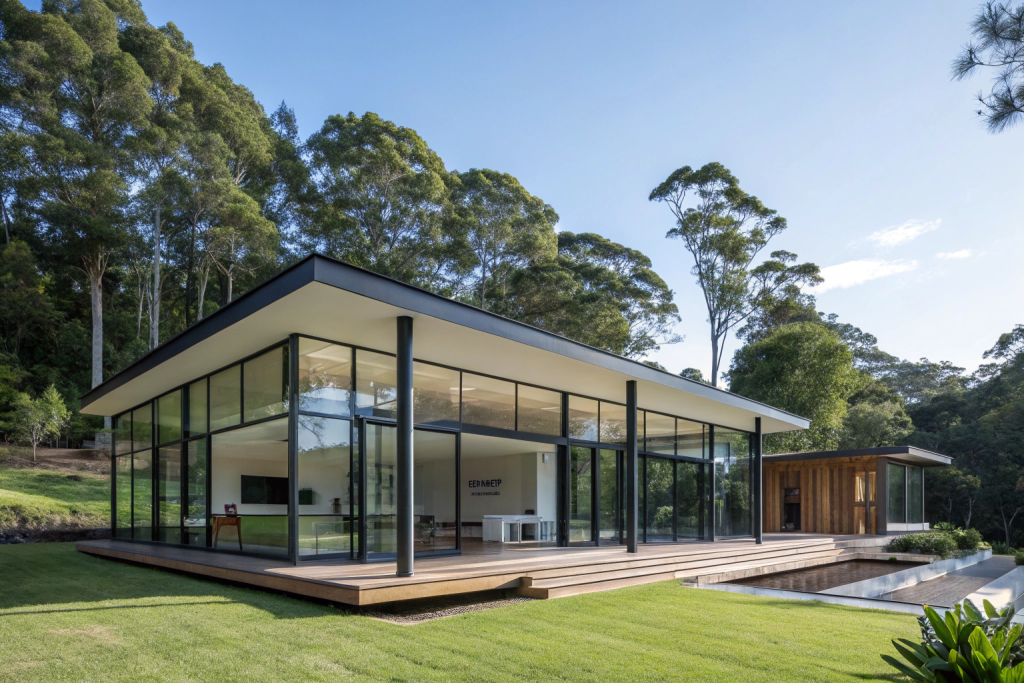
Experienced Pavilion Builders Central Coast
We’ve built pavilions across the Central Coast for properties with different challenges – sloped blocks, coastal exposure, bushfire zones, and council restrictions. This experience means we know what works in this environment and what doesn’t.
Our team understands structural engineering requirements for large-span structures. We work with certified engineers who calculate loads, specify materials, and ensure designs meet building codes. This engineering knowledge prevents problems during construction and council approval processes.
Central Coast Council approval is something we handle regularly. Different council areas have different requirements – Gosford regulations differ from Wyong requirements. We know the DA process, CDC options, and what documentation the council needs for substantial structures like pavilions.
Coastal construction knowledge matters. Salt air affects materials differently than inland environments. Wind loads on coastal properties require different engineering than sheltered sites. We specify materials and construction methods suited to Central Coast conditions – not generic solutions that might work elsewhere but fail here.
Licensed, insured, and experienced with large outdoor structures. That’s what you’re getting when we build your pavilion.

Pavilion Design Styles for Central Coast Properties
Open-air pavilions with posts and a roof provide maximum airflow while giving full overhead protection. Partially enclosed designs add walls on one or two sides for wind protection or more defined outdoor rooms – you might enclose the western side to block afternoon sun or add a wall where your outdoor kitchen sits.
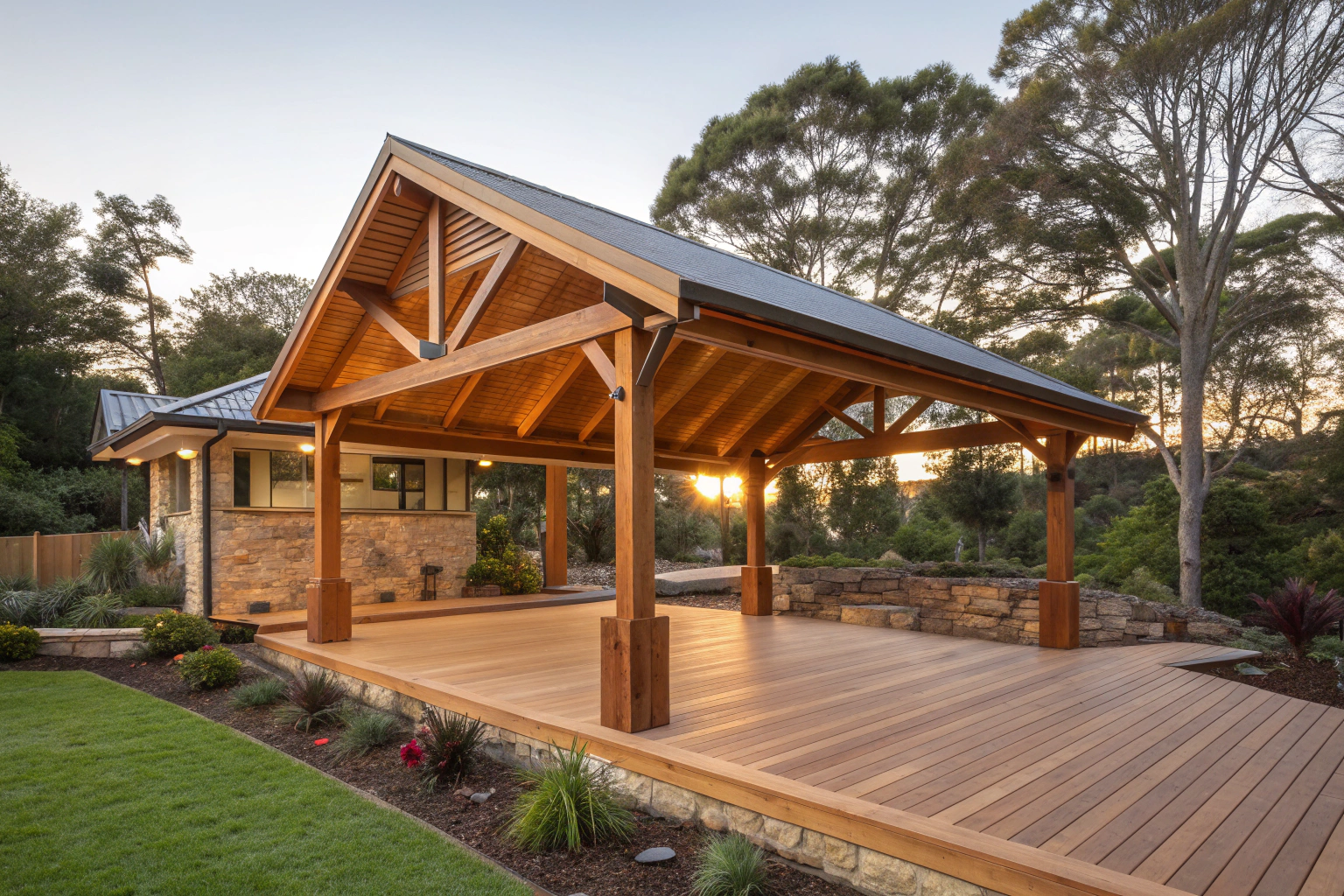
Gabled roof pavilions bring traditional elegance with peaked designs that handle water runoff well. Flat-roof modern structures create clean lines for contemporary properties. Hip roof styles slope on all four sides, providing even weather protection for freestanding pavilions. Skillion contemporary designs feature single-sloped roofs – simple, cost-effective, and increasingly popular. These can be oriented to maximise views or provide shade where needed.
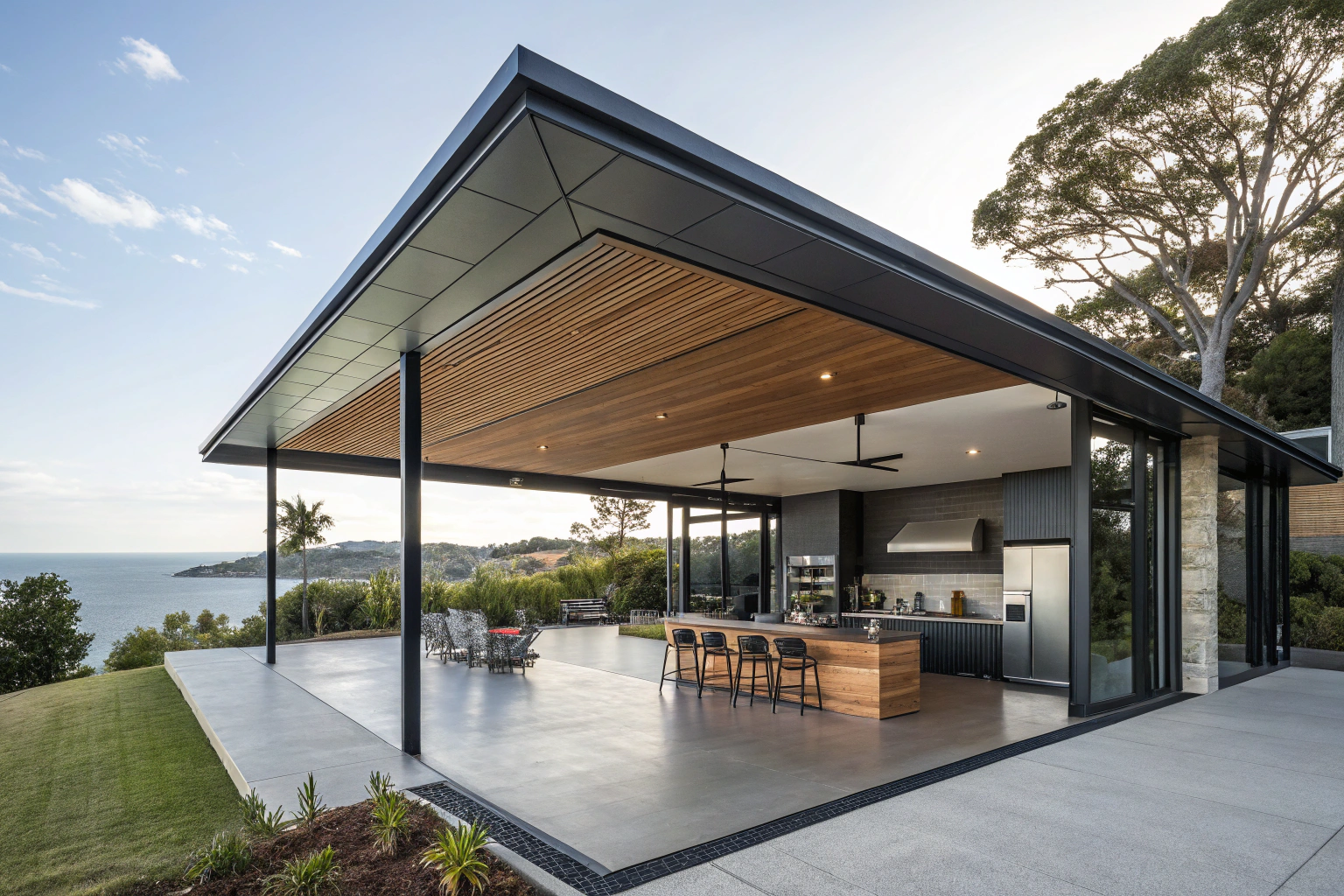
Timber frame pavilions use hardwood beams and posts for natural aesthetics. Steel construction allows large spans without intermediate posts – 6 by 8 meters with no posts in the middle becomes possible. Colonial-style pavilions feature decorative posts and brackets for heritage properties. Custom architectural designs work when standard styles don’t fit your site or you need the pavilion to match specific home features.


Pavilion Construction Materials & Features
Structural engineering for large spans is where pavilion construction differs from basic outdoor structures. These need proper engineering to support roof loads, handle wind loads, and remain stable in Central Coast conditions. We work with structural engineers to certify designs before construction starts.
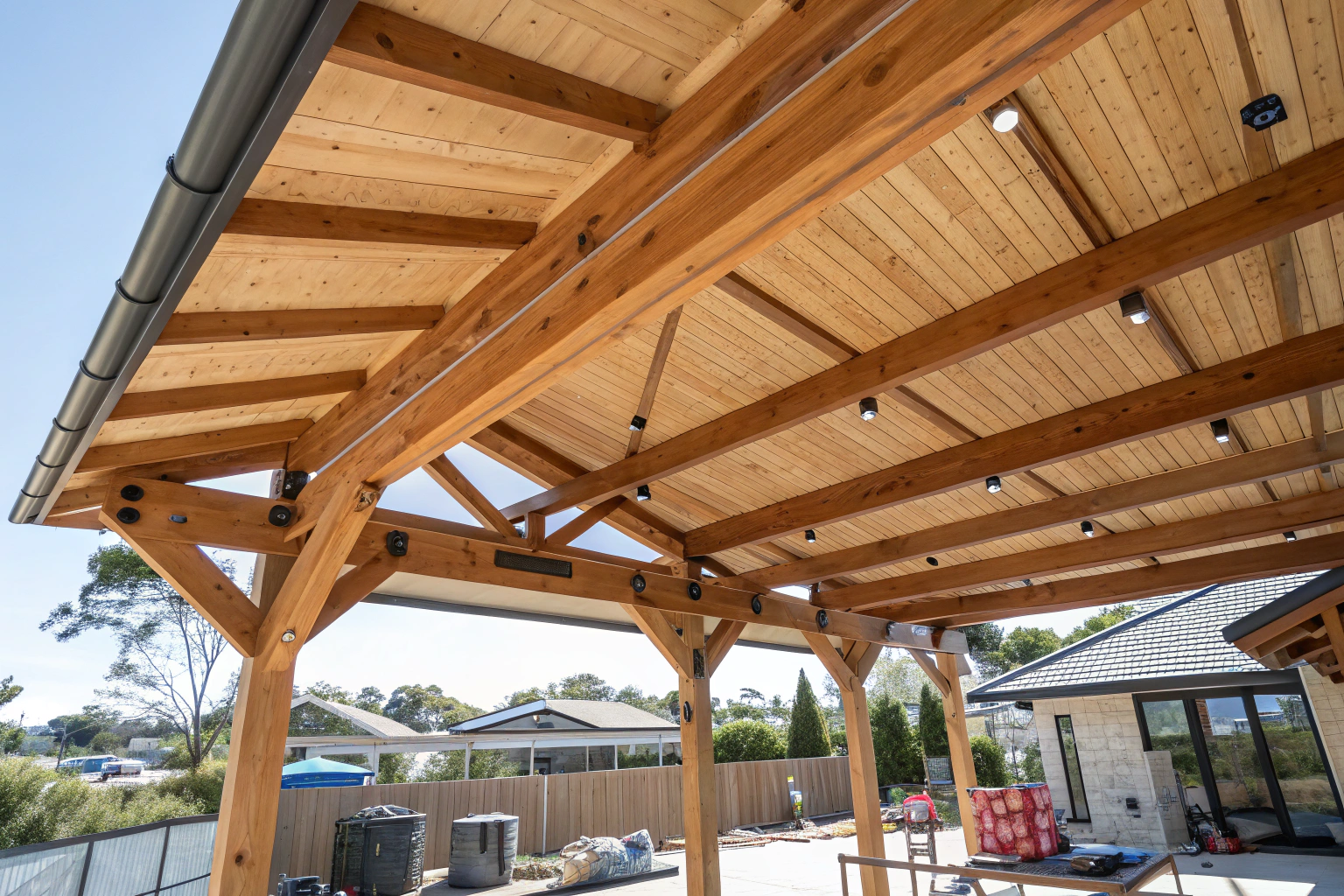
Timber construction using hardwood beams and posts creates substantial structures with natural aesthetics. Spotted gum, ironbark, or treated pine are common choices. Steel frame systems deliver strength and durability – galvanised or powder-coated steel frames can span larger distances than timber and require less maintenance in salt air environments.
Colorbond or tile roofing provides actual weather protection. Colorbond is lightweight and handles coastal corrosion well. Tile roofing is heavier but provides better insulation. Insulated roof options make pavilions more comfortable year-round – keeping the space cooler in summer and reducing condensation in winter.
Built-in features like outdoor kitchens, bars, or fireplaces can be integrated during construction. Flooring choices include timber decking, paver surfaces, or polished concrete – each creates different aesthetics and functionality suited to coastal conditions.
Planning Your Central Coast Pavilion Project
Site positioning affects how well the pavilion works. Consider views, sun angles, prevailing winds, and how the structure relates to your house and garden. A pavilion positioned for morning sun works differently from one designed for afternoon shade.
Size and scale proportions need to suit your property. A massive pavilion on a small block looks out of place. An undersized pavilion on a large property doesn’t provide the coverage you need.
Central Coast Council requirements for large structures include setbacks from boundaries, height restrictions, and sometimes bushfire or flood planning considerations. Council rules vary depending on your specific location and zoning.
Wind load compliance matters on the Central Coast – pavilions need to be engineered for local wind ratings. Bushfire ratings apply in some areas. Utility connections for electrical, plumbing, or gas need planning – running these services to a freestanding pavilion requires trenching and proper installation by licensed trades.
Weather Protection & Year-Round Use
Central Coast weather changes fast. Afternoon storms roll in off the ocean with little warning. Summer UV levels are harsh. Salt air corrodes unprotected materials. Without proper overhead protection, outdoor areas sit unused for months each year.
Pavilions handle these conditions. Solid roofing keeps rain off your furniture and outdoor kitchen equipment. The structure provides shade during summer when UV exposure makes unprotected outdoor spaces uncomfortable. Wind protection comes from the roof overhead and any enclosed sides – you’re not getting blasted by coastal breezes.
Year-round functionality is what you’re paying for. Winter months don’t shut down your outdoor space. Summer storms don’t force everyone inside. The pavilion creates a reliable outdoor room that works regardless of season or weather forecast. That’s the difference between a covered structure and an open deck.
Frequently Asked Questions
Pavilions have solid roofing – Colorbond, tiles, or insulated panels that provide complete overhead protection. Pergolas have open roofing with rafters or slats that let light and rain through. If you want full weather protection and a proper outdoor room, you need a pavilion. Pergolas provide shade but don’t keep rain out.
Most pavilions require council approval because they’re substantial permanent structures. Depending on size, location, and design, you might need a DA (Development Application) or CDC (Complying Development Certificate). We handle the approval process including documentation and council communication.
Yes. Many Central Coast properties have sloped blocks, and pavilions can be engineered for these sites. The structure might require taller posts on the downhill side, stepped footings, or terraced design. Site assessment determines the best approach for your property’s slope and soil conditions.
Yes, pavilions can be modified after construction. You can add shade blinds, privacy screens, cafe-style blinds, or even permanent walls. The original structure needs to be engineered to handle additional wind loads if you’re planning future enclosures – mention this during design so the frame is built appropriately.
Substantial outdoor structures like pavilions typically increase property value, particularly on the Central Coast where outdoor living is valued. Well-designed pavilions that integrate with the property and provide functional outdoor space appeal to buyers. The increase depends on overall property value, pavilion quality, and how well it suits the property.
