
Why Choose Treated Pine Decking

Treated pine gets a bad rap sometimes, but that’s usually from people who either got a dodgy installation or didn’t maintain it. When you do it properly, treated pine decking is one of the smartest choices you can make for a Central Coast property.
The numbers tell the story – you’re looking at roughly half the material cost compared to hardwood. For a standard 30 square meter deck, that’s thousands of dollars staying in your pocket. That’s the difference between just having a deck and having a deck with proper lighting, built-in seating, or privacy screening.
But here’s what really matters – that timber’s been pressure-treated with chemicals that stop rot and termites dead in their tracks. Around here, with the humidity and coastal conditions, that protection isn’t optional. We’ve pulled out untreated pine decks that lasted maybe five years. Properly treated pine? We’re talking 15-20 years with decent maintenance.
Key Benefits for Central Coast Homeowners:
• Cost-effective without sacrificing quality
• Chemically protected against rot, decay, and termite damage
• Available quickly (no waiting months for specialty hardwoods)
• Takes stains and oils beautifully once cured
• Lighter weight, easier on existing structures
• Perfect for investment properties or rental homes
• Great option for pergolas, screening, and deck substructure
The timber’s also easier to work with during installation, which means less labour time and a cleaner finish. And if you want to paint or stain it a specific colour to match your home? Treated pine accepts finishes way better than most hardwoods.

Treatment Types & Grades
This is where people’s eyes usually glaze over, but stick with me because getting the wrong treatment level is how decks fail early. The treatment isn’t just one thing – there’s different levels depending on where the timber’s going and what it needs to handle.
H3 Treatment – Above-Ground Applications
This is your standard deck board treatment. H3-rated timber is designed for weather exposure but not ground contact. It handles rain, UV, and general outdoor conditions fine. Most of your actual decking surface uses H3 because it’s sitting on bearers and joists, not touching soil or trapped moisture. Around the Central Coast, H3 works well for decking boards, handrails, and any timber that’s got good airflow underneath.
H4 Treatment – Ground Contact & High Hazard
Now we’re talking serious protection. H4 is what you want for posts in the ground, bearers close to soil, or anywhere moisture accumulates. The chemical retention is higher, protection’s better. Any structural timber within 150mm of the ground should be H4 minimum. We’ve seen too many decks sag because someone used H3 bearers – don’t be that person.
Treatment Chemistry – CCA vs ACQ
CCA (Copper Chrome Arsenate) was the old standard, still available for some applications. ACQ (Alkaline Copper Quaternary) is the newer, more environmentally friendly option. Both work, but ACQ requires different fasteners – you need hot-dipped galvanised or stainless steel because ACQ’s more corrosive. Check what treatment your timber has before you start drilling.
Understanding Hazard Levels for Our Climate
The Central Coast sits in a high-hazard zone for timber. Salt air accelerates corrosion, humidity promotes rot, and we’ve got active termite populations. The Australian standards account for this, but you need to match your treatment level to the specific application:
| Deck Component | Minimum Treatment | Why |
| Decking Boards | H3 | Weather-exposed, good drainage |
| Joists | H3 (H4 preferred) | Protected but humid environment |
| Bearers | H4 | Close to ground, limited airflow |
| Posts | H4 | Ground contact or near-ground |
| Stairs | H3 | Similar to decking |
Heartwood vs Sapwood
Here’s something most builders won’t tell you – not all treated pine is equal even with the same rating. Sapwood (the outer, lighter-colored timber) absorbs treatment better than heartwood (the darker centre). You want sapwood for maximum protection, but you’ll get a mix in most batches. The treatment penetration matters more than the colour though.
Choosing the Right Grade
Don’t use the same grade for everything. Your structural timber (posts, bearers, joists) should be better grade with fewer knots. Decking boards can be slightly lower grade because they’re not load-bearing. We typically use F7 structural grade for framing and a good appearance grade for visible surfaces.
Professional Installation
Here’s where the rubber meets the road – you can buy the best treated pine money can buy, but if the installation’s dodgy, your deck won’t last. We’ve been called out to fix too many DIY disasters and cowboy builder jobs to count.
Proper Substructure Design
The frame is everything. Your joists need to be spaced correctly – typically 450mm centres for treated pine decking. Go wider and you’ll get bounce. Bearers need adequate support, and everything needs to be level and square. Shortcuts here mean problems in two years when boards start cupping or the whole structure feels unstable.
Letting Timber Stabilise
Fresh treated pine is wet – really wet. The treatment process saturates the timber, and it needs time to dry out and reach equilibrium with the environment. We typically let framing timber sit for a few weeks after installation before adding decking boards. Rush this and you’ll get crazy shrinkage, gaps appearing, and boards warping as they dry.
Fastening Methods Matter
Use galvanised or stainless steel fasteners only. Standard nails or screws will corrode fast with ACQ-treated timber and our salt air. We prefer 304 stainless deck screws for visible surfaces and hot-dipped galvanised bolts for structural connections. Pre-drill everything to prevent splitting – treated pine’s harder than you think when it’s fresh.
Spacing and Drainage
Leave 5mm gaps between boards for drainage and expansion. Treated pine moves more than hardwood as it dries and swells with moisture. Without proper gaps, boards will cup and push against each other. And make sure water can escape – no trapped moisture pockets anywhere.
Cut Ends and Exposed Grain
Every time you cut treated pine, you expose untreated timber inside. Those cut ends need sealing with cut-end treatment solution before installation. Skip this step and you’re creating entry points for moisture and rot. Takes five minutes per cut, saves years of lifespan.
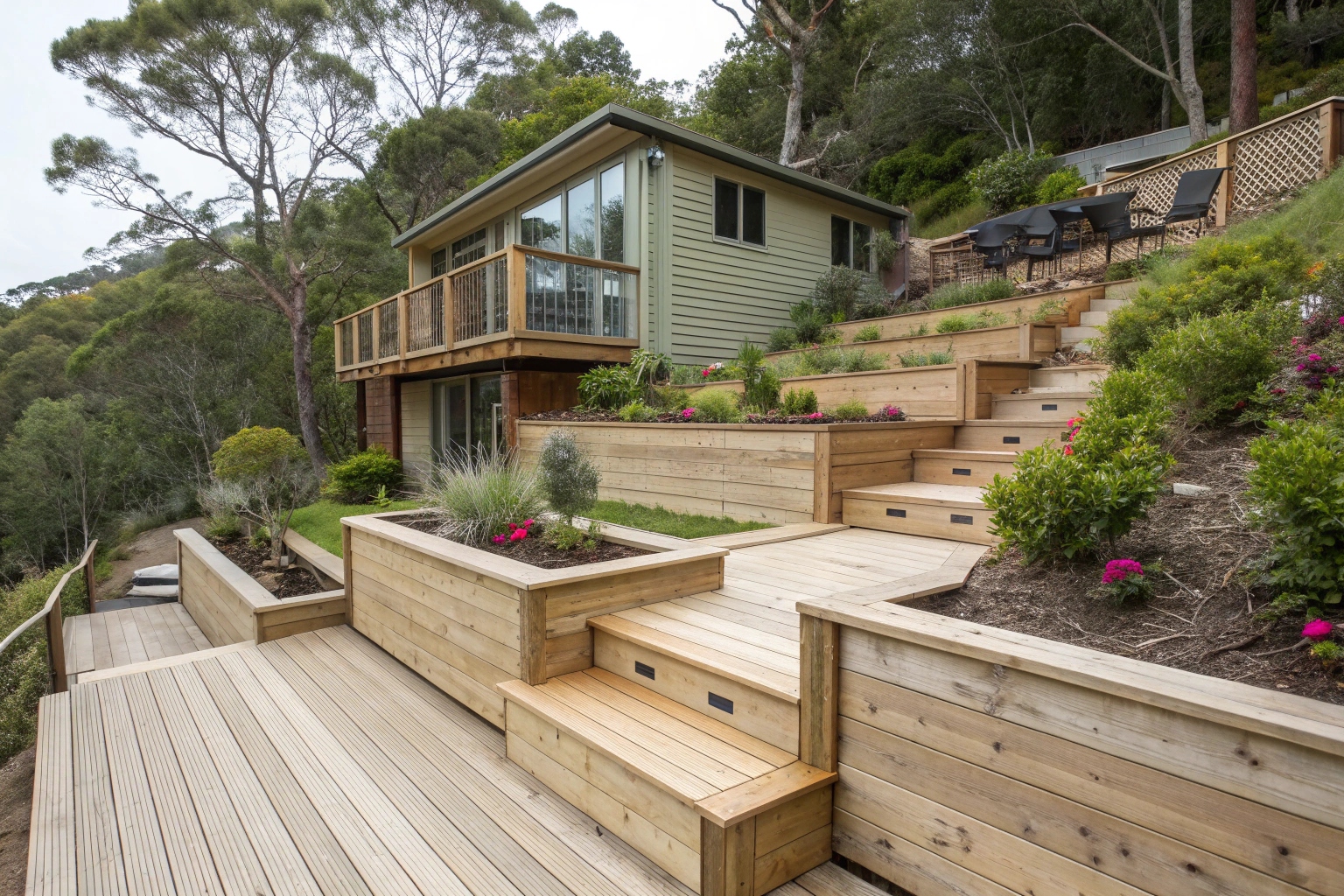
Finishing & Maintenance
So your deck’s built and looks great. Now comes the part that keeps it looking great – and this is where treated pine needs more attention than hardwood, no point pretending otherwise.
The Waiting Game
Don’t touch that timber with stain or oil for at least six months, preferably twelve. The treatment chemicals need to cure, and the timber needs to dry out properly. Try to stain wet-treated pine and you’re wasting your money – it won’t penetrate, won’t last, and you’ll be doing it again in six months anyway. We know it looks a bit rough when it’s fresh, but patience pays off here.
Stain and Oil Options
Once it’s ready, you’ve got choices. Oil-based stains penetrate best and give good protection against moisture and UV. Water-based stains are easier to apply and clean up. We typically recommend a quality decking oil with UV inhibitors for Central Coast conditions – reapply every 12-18 months depending on sun exposure. Don’t cheap out on the product; good oil costs more but lasts twice as long.
Can You Paint It?
Yeah, you can paint treated pine, and it actually works well if you want a specific colour scheme. Use exterior-grade acrylic paint designed for timber. The surface needs to be completely dry and lightly sanded first. Painted decks need repainting every few years, but they hide the timber grain if that’s not your thing.
Maintenance Reality Check
Treated pine needs more maintenance than hardwood – that’s just facts. Plan on cleaning and re-oiling annually or every 18 months. Sweep off leaves and debris regularly because trapped organic matter holds moisture. Check for any split boards or loose fasteners during your annual maintenance. Catch small problems early and they stay small problems.
Preventing Problems
Keep pot plants on feet so water drains away. Trim back vegetation that touches the deck. Make sure your gutters aren’t overflowing onto the deck. These small things make a massive difference to how long your deck lasts.

Frequently Asked Questions About Treated Pine Decking
With proper maintenance, you’re looking at 15-25 years easily. The key is keeping up with annual cleaning and oiling. We’ve got treated pine decks around Terrigal that are pushing 20 years and still solid. The coastal environment’s tough, but the chemical treatment handles it if you do your part with maintenance.
Wait at least six months, ideally a full year. Fresh treated pine is saturated with chemicals and moisture. Stain it too early and it won’t penetrate properly, won’t last, and you’ll waste your money. Do the water test – splash some water on the timber. If it beads up, it’s not ready. If it soaks in, you’re good to go.
Treated pine costs roughly half what hardwood does – that’s $4,000-$6,000 in your pocket for a typical deck. Hardwood lasts 25-40 years with oiling every 2-3 years. Treated pine gives 15-25 years with annual maintenance. Hardwood has that premium look immediately, treated pine develops rustic character once weathered. Long-term stay with minimal fuss? Hardwood. First home or investment property? Treated pine delivers real value.
Modern ACQ-treated pine is safe once it’s dried and cured. The chemicals are locked into the timber. We don’t recommend it for veggie garden beds or playground sandpits, but for decking it’s fine. Wash hands after handling fresh-cut treated timber, same as you would with any building material.
Decking boards and anything above ground with good airflow – H3. Posts, bearers near the ground, or anywhere moisture accumulates – H4. When in doubt, go H4. It costs a bit more but gives you better protection in our coastal climate.
Yeah, that’s literally what it’s designed for. The treatment protects against rot, decay, and termites – all the things our climate throws at timber. Salt air, humidity, UV exposure – treated pine handles it. You just need proper installation and regular maintenance to keep it performing.
Some movement’s normal as the timber dries out and stabilises. Proper installation with correct spacing, good fasteners, and allowing the timber to acclimatise minimises this. You might get minor surface checking (small cracks), but that doesn’t affect structural integrity. Major warping usually means installation issues or poor-quality timber.
Ready for Your Treated Pine Deck? Let's Talk
You’ve done your research, you know what you want, and you’re ready for a deck that delivers quality without breaking the bank. That’s exactly what we do.
We’ll come out to your Central Coast property, have a proper look at your space, and give you an honest quote – no games, no hidden extras. Whether you’re in Terrigal, Avoca Beach, Gosford, or anywhere around the Coast, we’ve built decks on blocks just like yours.
Get your free treated pine decking quote today.
Call us on 0240036404 or fill out the contact form below. We’ll usually get back to you within 24 hours, and we can have someone out for a site visit within the week.
Let’s build you a deck that works for your budget and lasts for years.
